Hilton added 100,000 rooms to its portfolio in 2024. On top of the yearly pipeline of new openings, the company acquired two brands and entered partnerships with two others. This marked a different approach — previous new brands like Motto and Tempo were built from scratch, not acquired. Integrating the new brands and partners into the digital experience was an all-hands-on-deck effort.
Throughout the website’s booking experience, chips highlight key attributes. One, simply labeled “New,” appeared in hotel search results next to new hotels. Business requirements limited the qualifying criteria to hotels built within a certain timeframe. A search filter for “New Hotels” used the same criteria.
A chance to enhance
Given the portfolio’s recent growth, we recognized that “New” may not be descriptive enough, and qualitative research confirmed our suspicions. Revisiting “New” would be the first step in clarifying these chips and filters for the user.
To start, I mapped out the different types of “new:”
- just-built hotels
- hotels that had been newly converted from other brands
- hotels that had been reflagged within the portfolio
- newly acquired hotels
- and so on.
I pitched “Newly built” as the third variant to test against “New” and “New hotel” (this option was for parity with the aforementioned filter)
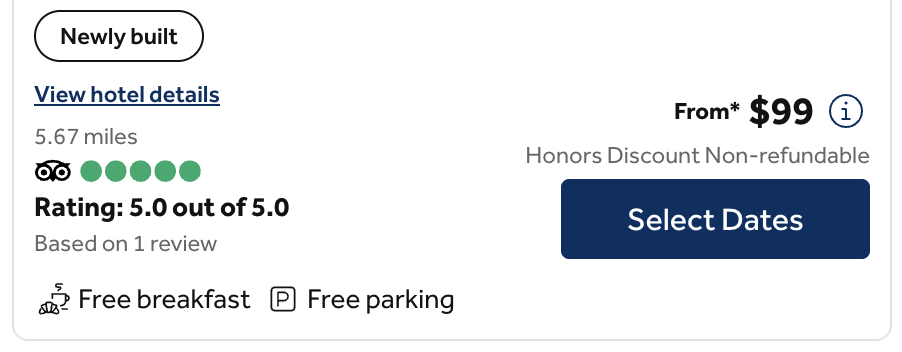
Clear language makes a measurable impact
In a win for clear language, the “Newly built” variant increased clickthrough by 2.5% and boosted revenue per visitor by 1.5%. This revealed opportunities to experiment further and find better ways to highlight the many, many other types of “new.”